
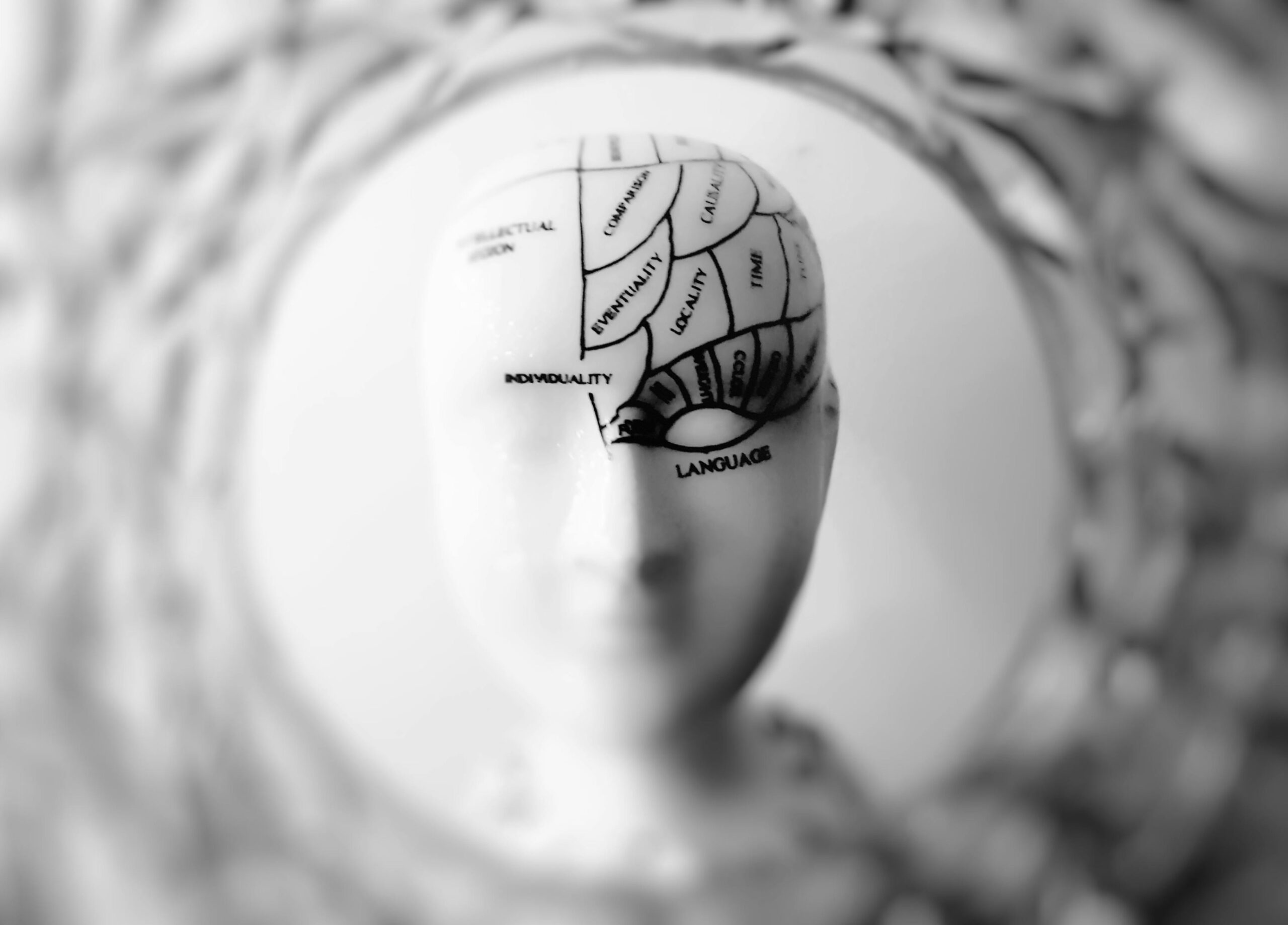
You don’t “have” a personality in the way you think you do.
At a biological level, what you call identity is not a fixed entity—it’s a living, dynamic pattern of neural firing that is constantly updating itself. Every belief you hold, every emotional reaction you default to, every “this is just how I am” statement… is the result of circuits that have been reinforced—not defined.
Here’s the paradox:
The more something feels like “you,” the more likely it is just a well-rehearsed neural habit.
And habits, by definition, can be rewired.
2. Conceptual Foundation
To understand how identity can change, we need to move from philosophy to biology.
Neuroplasticity
Neuroplasticity refers to the brain’s ability to reorganize itself by forming, strengthening, or weakening synaptic connections. This happens through:
- Synaptic potentiation (strengthening connections)
- Synaptic pruning (eliminating unused pathways)
- Myelination (increasing signal efficiency)
The core principle is often summarized as:
“Neurons that fire together, wire together.” — a concept rooted in Hebbian learning.
Key Brain Systems Involved
- Prefrontal Cortex (PFC): Executive control, decision-making, cognitive flexibility
- Default Mode Network (DMN): Self-referential thinking, identity narrative, mind-wandering
- Amygdala: Emotional tagging, threat detection
- Basal Ganglia: Habit formation and automatic behavior loops
Your identity emerges from how these systems interact over time.
3. Deep Explanation (Mechanism)
Let’s go deeper into the mechanics.
Every thought you think activates a specific neural pathway. Repetition strengthens that pathway through a process called long-term potentiation (LTP), where synapses become more efficient at transmitting signals.
Over time:
- Repeated thoughts → stronger synaptic connections
- Stronger connections → faster activation
- Faster activation → automatic thoughts
- Automatic thoughts → perceived identity
This creates a feedback loop:
Thought → Emotion → Behavior → Reinforcement → Identity
For example:
- You repeatedly think: “I’m not good at public speaking.”
- This activates anxiety (amygdala response)
- You avoid speaking opportunities
- Avoidance reinforces the belief
- The brain encodes this pattern as “truth”
At the synaptic level, this isn’t a belief—it’s a dominant neural pathway.
4. Research Integration
Modern neuroscience and psychology strongly support this framework.
Hebbian Learning
Donald Hebb’s theory explains how repeated co-activation of neurons strengthens connections. This is foundational to learning and identity formation.
Cognitive Behavioral Therapy (CBT)
CBT operates on the premise that changing thought patterns changes neural pathways. Neuroimaging studies show that CBT can:
- Increase activity in the prefrontal cortex (top-down regulation)
- Decrease hyperactivity in the amygdala (emotional reactivity)
Default Mode Network (DMN)
Research using fMRI shows that the DMN is highly active during self-referential thinking (“Who am I?” narratives). Overactivity in the DMN is linked to:
- Rumination
- Depression
- Rigid identity patterns
Meditation and attentional training have been shown to reduce DMN activity, allowing more cognitive flexibility.
Neuroplastic Change Across Lifespan
Contrary to earlier beliefs, neuroplasticity does not stop in adulthood. Studies demonstrate that:
- Learning new skills reshapes cortical maps
- Emotional regulation practices alter limbic system responses
- Even personality traits show measurable shifts over time
5. Real-World Translation
This isn’t abstract neuroscience—it directly shapes your daily experience.
Why You React the Same Way Repeatedly
When a situation triggers a familiar response (stress, self-doubt, anger), it’s not “you being you.”
It’s a low-resistance neural pathway activating faster than conscious control.
Why Change Feels Difficult
Changing behavior requires:
- Activating weaker neural circuits
- Suppressing dominant ones
This is metabolically expensive. The brain prefers efficiency, not transformation.
Why Identity-Based Statements Are Dangerous
Statements like:
- “I’m just an anxious person”
- “I’m not disciplined”
- “I overthink everything”
These aren’t observations—they are reinforcement commands.
Each repetition strengthens the very circuitry you want to change.
6. Cognitive Reframe
Old Model:
Identity → Thoughts → Behavior
New Model:
Repeated Thoughts → Neural Wiring → Identity
This shift is critical.
You are not expressing your identity through your thoughts.
You are constructing your identity through repeated neural activation.
Identity is not the cause—it’s the consequence.
7. Practical Protocols (Rewiring the Brain)
1. Pattern Interruption (Cognitive De-automation)
Goal: Break automatic neural firing
Method:
- Notice the moment a familiar thought arises
- Label it: “This is a learned pattern, not reality”
Why it works:
Labeling activates the prefrontal cortex, reducing amygdala-driven automaticity. It creates a gap between stimulus and response.
2. Thought Replacement with Emotional Encoding
Goal: Build alternative neural pathways
Method:
- Replace the default thought with a new one
- Attach a felt emotional state (confidence, calm, clarity)
Example:
- Old: “I’ll fail this”
- New: “I can handle this step by step”
Why it works:
Emotion enhances synaptic plasticity. Without emotional engagement, new pathways remain weak.
3. Repetition with Variation
Goal: Strengthen new circuits
Method:
- Practice the new thought across different contexts
- Apply it in small, real-life situations
Why it works:
The brain generalizes patterns when exposed to variability, making the new pathway more robust.
4. Behavioral Alignment
Goal: Reinforce neural changes through action
Method:
- Take small actions consistent with the new identity
- Even minimal behavior counts
Example:
- Speak once in a meeting if your identity shift is toward confidence
Why it works:
Behavior feeds back into neural reinforcement loops, making the change biologically “real.”
5. Attention Training (Meditation / Focus Work)
Goal: Reduce DMN dominance
Method:
- Practice focused attention (breath, task, sensory input)
- Redirect attention when the mind wanders
Why it works:
This weakens self-referential loops and increases cognitive control over thought patterns.
8. Psychological Insight Layer
At a deeper level, identity is less about who you are and more about what your brain predicts you will be.
The brain operates as a prediction machine. It uses past patterns to anticipate future outcomes.
So when you try to change:
- The brain resists not because change is wrong
- But because change is unpredictable
This is why growth feels uncomfortable—it violates the brain’s predictive model.
The Hidden Mechanism
Your “subconscious patterns” are not mysterious forces.
They are:
- High-efficiency neural pathways
- Running below conscious awareness
- Optimized for predictability, not accuracy
This means:
You are not fighting yourself.
You are updating a prediction system.
9. Closing Insight
If identity is a pattern, not a possession—then the real question is not:
“Who am I?”
But:
“What patterns am I reinforcing—daily, quietly, and repeatedly—until they become me?”
Because at the synaptic level, your future self is not waiting to be discovered.
It is being built—one thought, one firing neuron, one repeated pattern at a time.